|
International financial market conditions during 2005-06 continued to remain favourable, notwithstanding a sharp rise in international crude oil prices and growing global financial imbalances. Although short-term interest rates moved up in a number of economies following tightening of monetary policy to anchor inflationary expectations in view of pressures emanating from higher energy prices, long-term nominal rates remained largely benign with real long-term interest rates ruling at very low levels. Equity markets remained buoyant, especially in emerging market economies (EMEs), on steady improvement in the fundamentals, improved growth prospects and increased appetite for risk. Emerging market spreads continued to hover around record low levels, reflecting shortage of foreign currency denominated bonds on account of improvements in the fiscal position of many EMEs as well as buybacks of outstanding bonds.
Short-term rates increased in a number of economies during 2005-06 as central banks raised their policy rates to ward off inflationary pressures from higher international crude oil prices in an environment of strong demand (Table 36). Amongst the advanced economies, the US recorded the maximum increase in rates, reflecting hikes by the Federal Open Market Committee (FOMC) in the federal funds rate target in each of its meetings held since June 2004. In some
|
Table 36: Short-term Interest Rates
|
| |
|
|
|
|
|
|
|
| |
|
|
|
|
|
|
(Per cent)
|
| |
|
|
|
|
|
|
|
|
Region/Country
|
March
|
March
|
June
|
September
|
December
|
March
|
| |
|
2004
|
2005
|
2005
|
2005
|
2005
|
2006
|
| |
|
|
|
|
|
|
|
|
1
|
|
2
|
3
|
4
|
5
|
6
|
7
|
| |
|
|
|
|
|
|
|
|
Advanced Economies
|
|
|
|
|
|
|
|
Euro Area
|
1.96
|
2.15
|
2.10
|
2.15
|
2.48
|
2.80
|
|
Japan
|
|
0.03
|
0.02
|
0.02
|
0.02
|
0.02
|
0.04
|
|
Sweden
|
|
2.12
|
1.97
|
1.48
|
1.46
|
1.68
|
1.99
|
|
UK
|
|
4.31
|
4.95
|
4.75
|
4.56
|
4.59
|
4.58
|
|
US
|
|
1.04
|
2.90
|
3.33
|
3.85
|
4.23
|
4.77
|
|
Emerging Market Economies
|
|
|
|
|
|
|
|
Argentina
|
2.88
|
4.56
|
6.94
|
6.69
|
8.00
|
9.63
|
|
Brazil
|
|
16.02
|
19.25
|
19.74
|
19.51
|
18.03
|
16.54
|
|
China
|
|
n.a.
|
2.25
|
2.30
|
4.38
|
2.90
|
2.40
|
|
Hong Kong
|
0.17
|
2.79
|
3.36
|
4.12
|
4.18
|
4.47
|
|
India
|
|
4.24
|
5.37
|
5.37
|
5.49
|
6.02
|
6.11
|
|
Malaysia
|
|
3.00
|
2.82
|
2.87
|
2.92
|
3.20
|
3.51
|
|
The Philippines
|
9.19
|
7.25
|
5.88
|
8.13
|
7.69
|
7.38
|
|
Singapore
|
0.69
|
2.06
|
2.06
|
2.34
|
3.22
|
3.44
|
|
South Korea
|
3.90
|
3.54
|
3.52
|
3.94
|
4.07
|
4.26
|
|
Thailand
|
|
1.31
|
2.64
|
2.75
|
3.90
|
4.50
|
5.10
|
|
n.a. : Not available.
Note :Data for India refer to 91-day Treasury Bills rate and for
other countries
3-month money market rates.
Source :The Economist.
|
economies such as the UK short-term rates eased
in response to weakening of economic activity.
In contrast to the uptrend in short-term
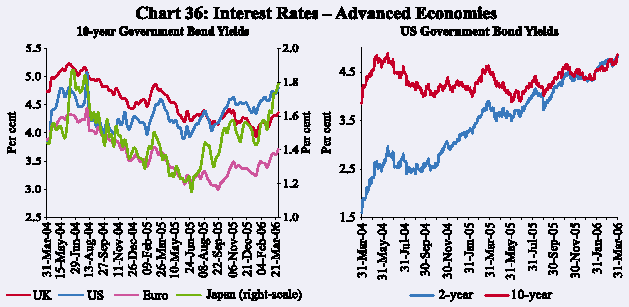
rates, long-term Government bond yields in the US as well as in the Euro area
remained largely range-bound during 2005-06. Structural factors such as increased
demand for fixed income products from pension funds and insurance companies
in response to regulatory changes provided support to long-term gilts. Excess
of global savings over global investment and reduction in inflation risk premium
also contributed to the flattening of the long-term yields during 2005-06. Yields
in the US declined initially during April-June 2005 on expectations that monetary
authorities could slow down policy tightening due to fragility in the economic
recovery. The US 10-year Treasury yield was at a 14-month low at 3.8 per cent
in early-June 2005. Yields, however, firmed up during July 2005 in the run up
to the widely anticipated revaluation of the Chinese currency on July 21, 2005.
With the Chinese authorities continuing to manage the renminbi tightly, the
yields reversed their increasing trend. Long-term Government bond yields increased
in the third quarter of 2005-06 in the US and in the Euro area in tandem with
sharp rise in headline inflation and higher short-term rates which increased
expectations regarding future policy rates. In the second half of December 2005,
10-year yields eased again and by the close of December, the yield curve in
the US became inverted (Chart 36). Yields again increased from the second week
of January 2006. The 10-year yield rose to 4.86 per cent on March 31, 2006,
the highest since June 2004 on the back of strong data and expectations that
the US FOMC may push the federal funds rate target higher than expected. In
the Euro area, the increase in long-term yields was also on account of improved
economic outlook. In Japan, long-term yields increased, reflecting recovery
in domestic demand and better economic prospects. The
decision of the Bank of Japan in
March 2006 to change the operating target of money market operations from the
outstanding balance of current accounts at the Bank to the uncollateralised
overnight call rate also pushed up yields in Japan. In the UK, the yields eased
marginally during 2005-06 in tandem with short-term rates.
Equity markets in many economies,
especially EMEs, exhibited buoyancy during 2005-06. Improvements in the fundamentals
of EMEs as well as higher risk appetite in an environment of very low long-term
real interest rates also increased foreign investors’ enthusiasm for emerging
market equities, pushing up valuations sharply and in some cases to new highs.
Intra-year movements in equity prices were influenced by concerns over oil prices
led by inflationary pressures and the likely future course of monetary policy.
In the wake of sharp increase in inflation during September 2005 and the prospects
of a faster pace of monetary tightening, equity prices declined in October 2005
around the world. Equity markets, however, bounced back in November 2005 on
signs of robust economic activity in the US and some moderation in international
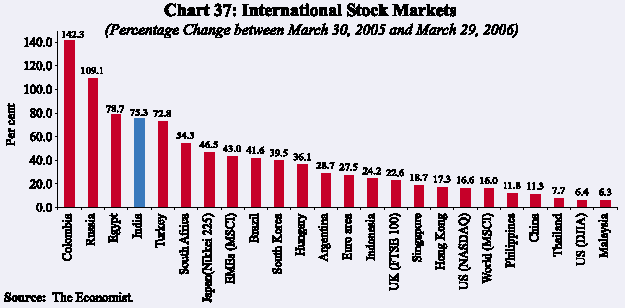
crude oil prices. During 2005-06, the Indian equity markets outperformed major
international equity markets except Colombia, Russia and Egypt (Chart 37). Equity
markets in the US, however, under-performed significantly as equities struggled
to cope with the impact of higher US interest rates and increasing activity
by the US investors in overseas markets. Equity markets in Asia witnessed some
decline in the second week of April 2006 on concerns that higher commodity prices
could lead to further monetary tightening.
Notwithstanding concerns over the
widening current account deficit in the US, the US dollar appreciated during
2005-06 benefiting from the growing interest and growth differential in favour
of the US and a year-long tax break designed to encourage US multinationals
to repatriate cash held overseas (Chart 38).
Indian financial markets remained
orderly during 2005-06 even as interest rates edged up across the spectrum.
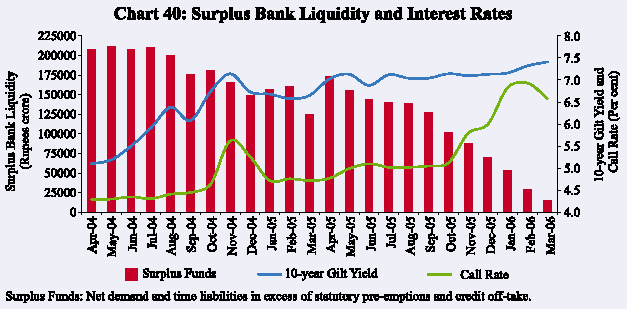
Liquidity conditions turned tight from mid-December 2005 due to the redemption
of the India Millennium Deposits (IMDs) in the wake of sustained credit growth
and some build-up of cash balances by the Government of India. Reflecting the
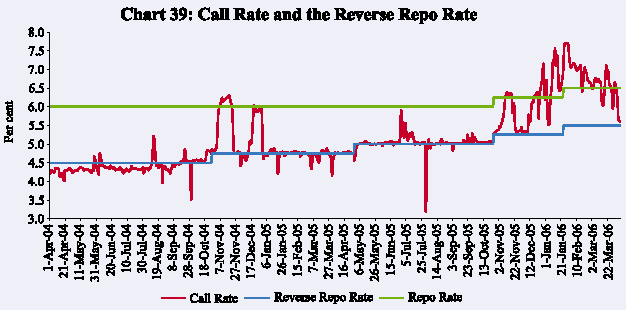
liquidity conditions, call money rates which had remained generally close to
the reverse repo rate during the most part of the first half of 2005-06 crossed
the repo rate during the fourth quarter. Interest rates in the collateralised
segment of money markets also edged up during the year, although they remained
below the repo rate during the fourth quarter. The foreign exchange market remained
more or less orderly, exhibiting two-way movements. Yields in the Government
securities market hardened during 2005-06, with the increase at the longer end
less than at the short-end. In the credit market, deposit and lending rates
edged up during the year as credit demand accelerated further. Capital markets
remained buoyant during 2005-06. Resources raised by the Indian corporates through
domestic as well as Euro issues increased substantially. The stock indices reached
record highs, driven by increased interest by domestic as well as foreign investors
on the back of strong macroeconomic fundamentals (Table 37).
Money Market
Money market conditions, which
remained comfortable up to October 2005, turned somewhat tight thereafter. During
April 2005, the Reserve Bank supplemented reverse repo operations with the sale
of Government paper under the Market Stabilisation Scheme (MSS) to absorb liquidity
and balance market conditions. Average daily call money borrowing rates ruled
at sub-reverse repo
|
Table 37: Domestic Financial Markets at a Glance
|
|
Month
|
|
Call Money
|
Government
|
|
Foreign Exchange
|
|
Liquidity
|
|
Equity
|
|
| |
|
|
|
|
Securities
|
|
|
|
|
|
Management
|
|
|
|
|
| |
|
|
|
|
|
|
|
|
|
|
|
|
|
|
|
|
|
| |
|
|
Average
|
Average
|
Average
|
Average
|
Average
|
Average
|
|
RBI’s net
|
Average
|
Average
|
Average
|
Average
|
Average
|
Average
|
Average
|
| |
|
|
Daily
|
Call
|
10-Year
|
Turnover
|
Daily
|
Exchange
|
|
Foreign
|
Forward
|
MSS
|
Daily
|
Daily
|
Daily
|
BSE
|
S&P
|
| |
|
Turnover
|
Rates*
|
Yield@
|
in Govt.
|
Inter-
|
Rate
|
|
Currency
|
Premia
|
Out-
|
Reverse
|
BSE
|
NSE
|
Sensex**
|
CNX
|
| |
|
|
(Rs.
|
(Per
|
(Per
|
Securities
|
bank
|
(Rs. per
|
|
Sales(-)/
|
3-month
|
standing#
|
Repo
|
Turnover
|
Turnover
|
|
Nifty**
|
| |
|
|
crore)
|
cent)
|
cent)
|
(Rs.
|
Turnover
|
US $)
|
|
Purchases
|
(Per
|
(Rs.
|
(LAF)
|
(Rs.
|
(Rs.
|
|
|
| |
|
|
|
|
|
crore)+
|
(US $
|
|
|
(+)
|
cent)
|
crore)
|
Out-
|
crore)
|
crore)
|
|
|
| |
|
|
|
|
|
|
million)
|
|
|
(US $
|
|
|
standing
|
|
|
|
|
| |
|
|
|
|
|
|
|
|
|
million)
|
|
|
(Rs.
|
|
|
|
|
| |
|
|
|
|
|
|
|
|
|
|
|
|
crore)
|
|
|
|
|
| |
|
|
|
|
|
|
|
|
|
|
|
|
|
|
|
|
|
|
1
|
|
|
2
|
3
|
4
|
5
|
6
|
7
|
|
8
|
9
|
10
|
11
|
12
|
13
|
14
|
15
|
| |
|
|
|
|
|
|
|
|
|
|
|
|
|
|
|
|
|
|
2004-05
|
|
|
|
|
|
|
|
|
|
|
|
|
|
|
|
|
|
April
|
|
|
12,916
|
4.29
|
5.10
|
10,029
|
10,302
|
43.93
|
|
7,427
|
- 0.35
|
14,296
|
75,006
|
2,243
|
5,048
|
5809
|
1848
|
|
May
|
|
|
10,988
|
4.30
|
5.19
|
6,202
|
8,882
|
45.25
|
|
-220
|
-1.33
|
27,518
|
74,502
|
2,188
|
4,710
|
5205
|
1640
|
|
June
|
|
|
10,974
|
4.35
|
5.50
|
5,860
|
7,847
|
45.51
|
|
-413
|
0.93
|
35,283
|
61,981
|
1,681
|
3,859
|
4824
|
1506
|
|
July
|
|
|
8,632
|
4.31
|
5.91
|
4,206
|
7,756
|
46.04
|
|
-1,180
|
2.25
|
43,739
|
59,594
|
1,793
|
4,265
|
4973
|
1568
|
|
August
|
|
11,562
|
4.41
|
6.38
|
4,173
|
5,947
|
46.34
|
|
-876
|
2.85
|
48,541
|
42,692
|
1,736
|
3,948
|
5144
|
1615
|
|
September
|
17,088
|
4.45
|
6.08
|
5,854
|
7,348
|
46.10
|
|
19
|
2.20
|
52,421
|
31,589
|
1,800
|
4,023
|
5423
|
1692
|
|
October
|
|
16,666
|
4.63
|
6.73
|
3,636
|
7,262
|
45.78
|
|
-99
|
2.87
|
53,660
|
10,805
|
1,730
|
3,785
|
5702
|
1795
|
|
November
|
13,820
|
5.62
|
7.14
|
2,607
|
9,930
|
45.13
|
|
3,792
|
2.20
|
54,157
|
-5,066
|
1,787
|
4,102
|
5961
|
1874
|
|
December
|
|
19,526
|
5.28
|
6.72
|
4,305
|
9,447
|
43.98
|
|
1,393
|
2.02
|
52,058
|
7,570
|
2,184
|
5,026
|
6394
|
2022
|
|
January
|
|
16,534
|
4.72
|
6.68
|
3,566
|
9,114
|
43.75
|
|
0
|
2.50
|
53,790
|
18,721
|
2,310
|
5,249
|
6307
|
1978
|
|
February
|
|
16,041
|
4.76
|
6.58
|
4,640
|
11,583
|
43.68
|
|
4,974
|
1.99
|
58,141
|
19,895
|
2,484
|
4,999
|
6595
|
2067
|
|
March
|
|
15,294
|
4.72
|
6.65
|
2,835
|
11,286
|
43.69
|
|
6,030
|
1.82
|
63,737
|
29,809
|
2,706
|
5,139
|
6679
|
2096
|
| |
|
|
|
|
|
|
|
|
|
|
|
|
|
|
|
|
|
|
2005-06
|
|
|
|
|
|
|
|
|
|
|
|
|
|
|
|
|
|
April
|
|
|
17,213
|
4.77
|
7.02
|
3,001
|
9,880
|
43.74
|
|
0
|
1.96
|
65,638
|
30,675
|
1,890
|
4,136
|
6379
|
1987
|
|
May
|
|
|
15,269
|
4.99
|
7.13
|
3,805
|
10,083
|
43.49
|
|
0
|
1.57
|
68,539
|
22,754
|
1,971
|
3,946
|
6483
|
2002
|
|
June
|
|
|
20,134
|
5.10
|
6.88
|
6,807
|
10,871
|
43.58
|
|
-104
|
1.40
|
70,651
|
13,916
|
2,543
|
4,843
|
6926
|
2134
|
|
July
|
|
|
20,046
|
5.02
|
7.13
|
3,698
|
11,003
|
43.54
|
|
2,473
|
1.56
|
70,758
|
10,754
|
3,095
|
6,150
|
7337
|
2237
|
|
August
|
|
16,158
|
5.02
|
7.04
|
4,239
|
11,749
|
43.62
|
|
1,552
|
0.69
|
71,346
|
34,832
|
3,452
|
6,624
|
7726
|
2358
|
|
September
|
16.292
|
5.05
|
7.04
|
5,207
|
11,040
|
43.92
|
|
0
|
0.62
|
67,617
|
31,570
|
3,871
|
6,923
|
8272
|
2512
|
|
October
|
|
17,164
|
5.12
|
7.13
|
2,815
|
13,087
|
44.82
|
|
0
|
0.69
|
68,602
|
18,608
|
2,955
|
6,040
|
8220
|
2487
|
|
November
|
22,620
|
5.79
|
7.10
|
3,314
|
11,228
|
45.73
|
|
0
|
0.67
|
67,041
|
3,268
|
2,635
|
5,480
|
8552
|
2575
|
|
December
|
|
21,149
|
6.00
|
7.13
|
2,948
|
13,632 P
|
45.64
|
|
-6,541
|
1.51
|
52,040
|
1,452
|
3,516
|
6,814
|
9162
|
2773
|
|
January
|
|
17,911
|
6.83
|
7.16
|
3,094
|
16,365 P
|
44.40
|
|
0
|
2.60
|
40,219
|
-15,386
|
3,966
|
7,472
|
9540
|
2893
|
|
February
|
|
13,497
|
6.93
|
7.32
|
2,584
|
15,644 P
|
44.33
|
|
2,614
|
2.85
|
33,405
|
-13,532
|
3,687
|
7,125
|
10090
|
3019
|
|
March
|
|
18,290
|
6.58
|
7.41
|
2,203
|
n.a.
|
44.48
|
|
n.a.
|
3.11
|
29,652
|
-6,017
|
5,398
|
9,518
|
10857
|
3236
|
| |
|
|
|
|
|
|
|
|
|
|
|
|
|
|
|
|
|
|
*:Average of daily weighted call money borrowing rates.
+:Average daily outright turnover in Central Government dated securities.
@:Average of daily closing rates.
**:Average of daily closing indices.
LAF : Liquidity Adjustment Facility.
MSS:Market Stabilisation Scheme.
BSE:The Stock Exchange, Mumbai.
NSE : National Stock Exchange of India Ltd.
#:Average of weekly outstanding MSS.
P:Provisional
n.a. : Not available.
Note:In column 11, (+) indicates absorption and (-) indicates injection
of liquidity.
|
rate levels on many occasions. With the increase in the fixed
reverse repo rate by 25 basis points on April 29, 2005, call rates also edged
up by a similar magnitude. Towards the end of June 2005, call rates rose above
the reverse repo rate under liquidity pressures on account of advance tax payments
and scheduled Treasury Bills auctions. Liquidity conditions improved by the
second half of July 2005 due to cancellation of some scheduled Treasury Bills
auctions and return of advance tax payments to the banking system. Large foreign
currency purchases from the authorised dealers during July-August 2005 also
improved liquidity conditions. This was reflected in a jump in average balances
under LAF reverse repos from Rs.10,754 crore in July to Rs.34,832 crore in August
2005. The call money market, thus, remained broadly stable during August 2005
and first half
of September 2005. During the second half of September 2005,
the call money market witnessed mild pressure, on account of advance tax outflows
and scheduled auctions. For the most part of October 2005, the call money rate
hovered around the reverse repo rate as liquidity conditions remained comfortable
(Charts 39 and 40). During November 2005, the call money rate remained generally
above the reverse repo rate and also exceeded the repo rate on a few occasions
reflecting liquidity pressures emanating from sustained credit demand, festival
demand for currency and scheduled auctions. The Reserve Bank, therefore, injected
liquidity into the system through LAF repos on seven occasions during the month.
The notified amount of Treasury Bills auctions under the MSS was also cancelled.
To fine tune the management of liquidity and in response to
suggestions from the market participants, the Reserve Bank introduced a Second
Liquidity Adjustment Facility (SLAF), with effect from November 28, 2005.
Beginning with the second half of December 2005, call money
rates again edged up as the market witnessed frictional liquidity pressures
emanating from sustained large credit offtake and quarter-end advance tax payments
amidst uncertainty relating to the redemption of IMDs. The call money rates
hovered above the repo rate for the most part of the fourth quarter of 2005-06.
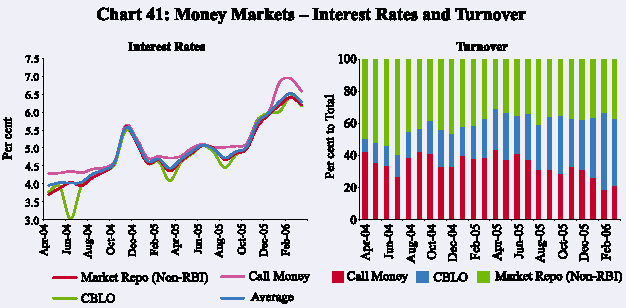
In contrast, the interest rates in the collateralised segments of the money
market – which account for a growing and predominant share (about 70 percent)
of the total money market turnover – remained below the repo rate (Chart 41).
For instance, the rates in the Collateralised Borrowing and Lending Obligation
(CBLO) segment averaged 6.23 per cent during January-February 2006, lower than
that of 6.88 per cent in the call money market. The higher call money rates
during the last quarter of 2005-06 reflected not only liquidity pressures but
also the divergent nature of the overnight markets between the collateralised
and uncollateralised segments. The call rates eased from the second half of
March 2006, reflecting improvement in liquidity conditions. The call money rate
was 5.55 per cent as on April 12, 2006. The turnover in the call/notice money
market during 2005-06 remained range-bound, in contrast to the uptrend in the
collateralised segments. This reflected the relatively higher rates in the call
money market as well as the process of phasing out of non-bank participants
from the call money market, which was completed on August 6, 2005 (Table 38).
The supply of funds in the CBLO segment has been augmented by the participation
of banks, mutual funds and financial institutions. Members operating in the
CBLO segment of the Clearing Corporation of India Limited (CCIL) increased from
110 as on March 31, 2005 to 152 as on March 31, 2006.
|
Table 38: Activity in Money Market Segments
|
| |
|
|
|
|
|
|
(Rupees crore)
|
| |
|
Average Daily Turnover
|
|
Outstanding Amount
|
Forward Rate
|
|
Month
|
Call Money
|
Term Money
|
Repo Market
|
Collateralised
|
Commercial
|
Certificates
|
Agreements/
|
| |
Market
|
Market
|
(Outside the
|
Borrowing and
|
Paper
|
of Deposit
|
Interest Rate
|
| |
|
|
LAF)
|
Lending
|
|
|
Swaps (Notional
|
| |
|
|
|
Obligation
|
|
|
Amount)
|
| |
|
|
|
(CBLO)
|
|
|
|
|
1
|
2
|
3
|
4
|
5
|
6
|
7
|
8
|
| |
|
|
|
|
|
|
|
|
2004-05
|
|
|
|
|
|
|
|
|
April
|
12,916
|
325
|
15,195
|
2,496
|
10,362
|
4,725
|
5,76,808
|
|
May
|
10,988
|
372
|
15,932
|
3,872
|
11,038
|
4,860
|
6,11,595
|
|
June
|
10,974
|
274
|
17,517
|
4,015
|
10,950
|
5,438
|
6,04,669
|
|
July
|
8,632
|
445
|
19,226
|
4,508
|
11,038
|
5,478
|
5,90,118
|
|
August
|
11,562
|
311
|
13,561
|
4,962
|
11,002
|
4,480
|
6,40,173
|
|
September
|
17,088
|
487
|
18,178
|
6,149
|
11,371
|
5,112
|
8,53,195
|
|
October
|
16,666
|
539
|
15,719
|
8,466
|
10,409
|
4,785
|
9,25,175
|
|
November
|
13,820
|
407
|
18,560
|
9,651
|
10,719
|
6,118
|
9,50,151
|
|
December
|
19,526
|
504
|
21,922
|
9,962
|
13,272
|
6,103
|
9,75,135
|
|
January
|
16,534
|
514
|
17,556
|
7,701
|
13,092
|
4,236
|
10,14,442
|
|
February
|
16,041
|
878
|
17,562
|
8,952
|
13,189
|
9,214
|
9,46,293
|
|
March
|
15,294
|
1,253
|
14,688
|
9,625
|
14,235
|
12,078
|
10,62,242
|
|
2005-06
|
|
|
|
|
|
|
|
|
April
|
17,213
|
661
|
12,174
|
10,370
|
15,598
|
16,602
|
10,76,513
|
|
May
|
15,269
|
545
|
13,688
|
12,233
|
17,182
|
17,689
|
10,72,684
|
|
June
|
20,134
|
534
|
17,163
|
11,792
|
17,797
|
19,270
|
10,93,367
|
|
July
|
20,046
|
717
|
18,103
|
15,292
|
18,607
|
20,768
|
12,18,072
|
|
August
|
16,158
|
754
|
21,325
|
14,544
|
19,508
|
23,568
|
13,15,084
|
|
September
|
16,292
|
1,116
|
18,872
|
17,143
|
19,725
|
27,641
|
13,17,829
|
|
October
|
17,164
|
734
|
20,980
|
21,763
|
18,726
|
29,193
|
13,42,335
|
|
November
|
22,620
|
917
|
25,660
|
20,496
|
18,013
|
27,457
|
14,75,384
|
|
December
|
21,149
|
775
|
25,574
|
21,265
|
17,234
|
32,806
|
13,92,606
|
|
January
|
17,911
|
1,089
|
24,596
|
25,634
|
16,431
|
34,521
|
13,16,351
|
|
February
|
13,497
|
813
|
24,096
|
34,162
|
15,876
|
33,986
|
13,37,720
|
|
March
|
18,290
|
1,338
|
31,964
|
35,775
|
12,693 *
|
36,931 #
|
n.a.
|
| |
|
|
|
|
|
|
|
|
n.a. : Not available. * : Provisional. # : As on March 17, 2006.
|
Other Money Market Instruments
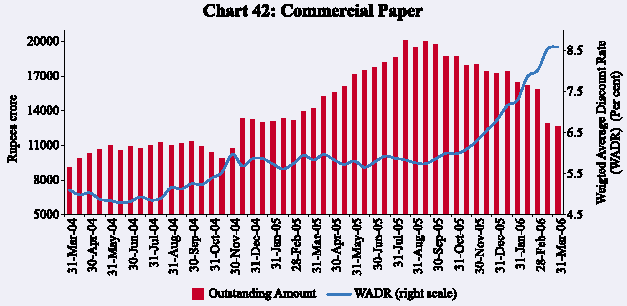
Issuances of commercial paper (CP), which had exhibited sustained
increases till mid-September 2005, witnessed a slowdown during the second half
of 2005-06, reflecting tight liquidity conditions. Outstanding CPs after increasing
from Rs.14,235 crore at end-March 2005 to Rs.20,019 crore by mid-September 2005
declined to Rs.12,693 crore by end-March 2006 (Chart 42). The weighted average
discount rate (WADR) on CPs increased from 5.84 per cent on March 31, 2005 to
8.59 per cent on March 31, 2006. Leasing and finance companies with their share
at 74.1 per cent (as on March 31, 2006) continued to be the largest issuers
of CPs, partly reflecting the policy of phasing out the access to these companies
to public deposits. Manufacturing and other companies and financial institutions
are the other major issuers with shares of 15.4 per cent and 10.5 per cent,
respectively, as on March 31, 2006.
Issuances of certificates of deposit (CDs) increased sharply
during 2005-06, reflecting banks’ demand for funds in the wake of acceleration
in demand for bank credit (Chart 43). The amount of CDs outstanding nearly trebled
during 2005-06 from Rs.12,078 crore at end-March 2005 to Rs.36,931 crore by
March 17, 2006 (constituting 4.3 per cent of aggregate deposits of issuing banks,
broadly the same as a year ago). The increase in the outstanding amount was
mainly on account of higher issuances by some private sector banks, reflecting
the cost attractiveness of the CDs to the banks vis-à-vis time
deposits. The higher recourse to CDs was also driven by reduction in the minimum
maturity period to seven days. The typical three-month discount rate on CDs
at 8.50 per cent on March
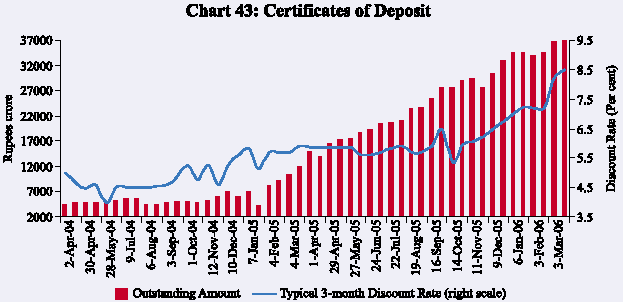
17, 2006 was higher by 263 basis points over its level at end-March 2005. As
in the case of CPs, mutual funds have emerged as key investors in CDs.
Treasury Bills
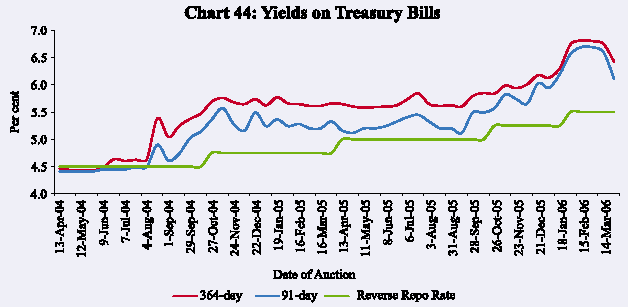
Yields in Treasury Bills (TB) auctions increased during 2005-06,
reflecting tight liquidity conditions. After remaining generally range-bound
during the first half of 2005-06, the yields edged higher in the subsequent
months. In view of the prevalent liquidity conditions, the Reserve Bank rejected
all the bids for the Treasury Bills auctions under the MSS scheduled on November
9, 2005 and discontinued the auctions under the MSS from November 16, 2005.
The yields after having recorded a sharp increase during January-February 2006,
however, eased during March 2006 reflecting improvement in liquidity conditions.
Yields in March 2006 were 103-127 basis points higher over their March 2005
levels. The yield spread between the 91-day and 364-day TBs was 15 basis points
during March 2006 as compared with 39 basis points during March 2005
(Table 39 and Chart 44).
|
Table 39: Treasury Bills in the Primary Market
|
|
Month
|
Notified Amount
|
Average Implicit Yield at Minimum
|
Bid-Cover Ratio
|
|
| |
(Rupees crore)
|
Cut-off Price (Per cent)
|
|
|
|
| |
|
|
|
|
|
|
|
| |
|
91-day
|
182-day
|
364-day
|
91-day
|
182-day
|
364-day
|
| |
|
|
|
|
|
|
|
|
1
|
2
|
3
|
4
|
5
|
6
|
7
|
8
|
| |
|
|
|
|
|
|
|
|
2004-05
|
|
|
|
|
|
|
|
|
April
|
13,500
|
4.38
|
|
4.44
|
2.15
|
|
2.47
|
|
May
|
12,000
|
4.39
|
|
4.33
|
2.93
|
|
2.46
|
|
June
|
14,000
|
4.44
|
|
4.55
|
2.61
|
|
1.28
|
|
July
|
10,000
|
4.46
|
|
4.60
|
2.39
|
|
2.06
|
|
August
|
10,000
|
4.76
|
|
5.00
|
1.81
|
|
3.36
|
|
September
|
12,000
|
4.72
|
|
5.14
|
2.51
|
|
2.83
|
|
October
|
16,000
|
5.15
|
|
5.46
|
1.82
|
|
2.75
|
|
November
|
5,500
|
5.47
|
|
5.71
|
2.80
|
|
2.64
|
|
December
|
9,500
|
5.30
|
|
5.69
|
2.69
|
|
2.81
|
|
January
|
12,000
|
5.31
|
|
5.69
|
2.19
|
|
2.06
|
|
February
|
12,000
|
5.25
|
|
5.65
|
2.99
|
|
2.81
|
|
March
|
12,000
|
5.24
|
|
5.63
|
2.31
|
|
2.74
|
| |
|
|
|
|
|
|
|
|
2005-06
|
|
|
|
|
|
|
|
|
April
|
19,000
|
5.17
|
5.36
|
5.62
|
4.03
|
4.48
|
2.54
|
|
May
|
15,000
|
5.19
|
5.35
|
5.58
|
3.30
|
3.37
|
2.29
|
|
June
|
18,000
|
5.29
|
5.37
|
5.61
|
1.54
|
2.42
|
1.81
|
|
July
|
11,500
|
5.46
|
5.67
|
5.81
|
1.21
|
2.58
|
1.68
|
|
August
|
21,000
|
5.23
|
5.42
|
5.63
|
3.07
|
2.68
|
2.54
|
|
September
|
23,000
|
5.24
|
5.37
|
5.70
|
1.52
|
1.45
|
1.61
|
|
October
|
15,000
|
5.50
|
5.71
|
5.84
|
1.69
|
1.53
|
3.44
|
|
November
|
11,000
|
5.76
|
5.87
|
5.96
|
2.12
|
1.97
|
2.30
|
|
December
|
5,000
|
5.89
|
6.04
|
6.09
|
3.07
|
2.97
|
2.36
|
|
January
|
5,000
|
6.25
|
6.22
|
6.21
|
2.86
|
2.83
|
2.72
|
|
February
|
5,000
|
6.63
|
6.74
|
6.78
|
3.04
|
2.07
|
2.71
|
|
March
|
6,500
|
6.51
|
6.66
|
6.66
|
4.17
|
3.43
|
3.36
|
| |
|
|
|
|
|
|
|
|
Note :
182-day TBs were reintroduced with effect from April 2005.
|
Foreign Exchange Market
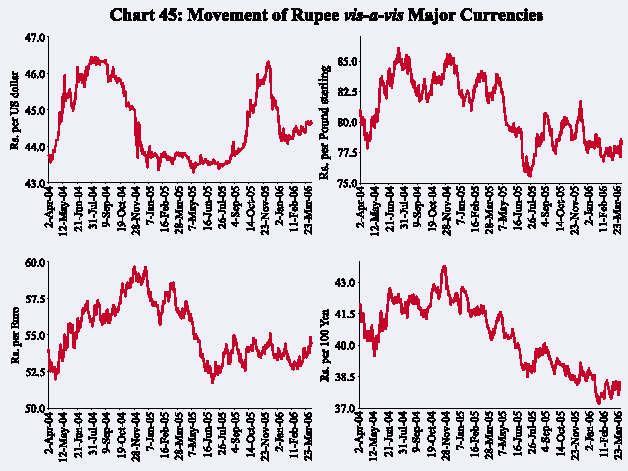
In the foreign exchange market, the Indian rupee exhibited
two-way movement vis-à-vis the US dollar during 2005-06, moving
in a range of Rs.43.30–46.33 per US dollar. The rupee initially appreciated
against the US dollar from Rs.43.76 at end-March 2005 to Rs.43.30 per US dollar
on May 12, 2005, despite outflows by FIIs and a higher merchandise trade deficit.
Subsequently, the rupee depreciated reaching Rs.43.76 per US dollar on June
2, 2005 due to strengthening of the US dollar in the international markets.
With the revaluation of the Chinese renminbi on July 21, 2005, there were appreciation
pressures and the rupee reached Rs.43.56 per US dollar on August 18, 2005. The
Reserve Bank made net market purchases of US $ 4.0 billion during July-August
2005. The rupee again came under pressure from end-August 2005 under the impact
of high oil prices, sharp increase in the current account deficit and strong
US dollar. The exchange rate moved to Rs.46.33 per US dollar on December 8,
2005. With the revival of FII inflows and weakening of the US dollar in the
international markets, the rupee strengthened sharply beginning with the second
half of December 2005. It touched Rs.44.07 per US dollar on January 31, 2006.
During February-March 2005, the rupee was largely range-bound and stood at Rs.44.61
per US dollar as on March 31, 2006 and at this level, the Indian rupee depreciated
by 1.9 per cent over its level on March 31, 2005. Reflecting cross-currency
movements, the rupee, however, appreciated against the other major international
currencies during 2005-06, i.e., 4.4 per cent against the Euro, 5.5 per
cent against the Pound sterling and 7.3 per cent against the Japanese yen (Chart
45). The exchange rate of the Indian rupee was Rs. 44.92 per US dollar as on
April 12, 2006.
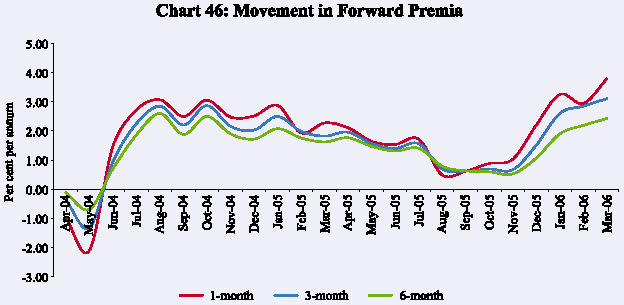
Forward premia declined during the first half of 2005-06 in tandem with the
narrowing of interest differential following the higher pace of monetary
tightening in the US. The premia, however, increased during December 2005-March
2006, reflecting higher domestic call money rates (Chart 46).
Credit Market
The demand for credit from the commercial sector strengthened
further during 2005-06. The non-food credit extended by scheduled commercial
banks as on March 31, 2006 grew (year-on-year) by 30.8 per cent on top of 28.8
per cent growth a year ago (net of conversion). Demand for bank credit was broad-based
led by agriculture, industry and personal loans (housing, credit cards, education)
sectors (Table 40). Disaggregated data show that almost 26 per cent of incremental
non-food credit during April-January 2005-06 went to the industrial sector,
while almost
|
Table 40: Deployment of Non-food Bank Credit
|
| |
|
|
|
(Amount in Rupees crore)
|
| |
|
|
|
|
|
|
|
Sector/Industry
|
Outstanding
|
Financial Year Variations
|
|
| |
|
as on
|
|
|
|
|
| |
|
|
2004-05 (Apr-Jan)
|
2005-06 (Apr-Jan)
|
| |
|
January 20, 2006
|
|
|
|
|
| |
|
|
Absolute
|
Per cent
|
Absolute
|
Per cent
|
|
1
|
|
2
|
3
|
4
|
5
|
6
|
| |
|
|
|
|
|
|
|
Non-food Gross Bank Credit (1 to 6)
|
12,56,368
|
1,34102
|
18.4
|
2,56,580
|
25.7
|
|
1.
|
Agriculture and Allied Activities
|
1,53,339
|
17,155
|
18.9
|
28,089
|
22.4
|
|
2.
|
Industry (Small, Medium and Large)
|
4,93,372
|
35,485
|
11.3
|
66,480
|
15.6
|
| |
Small Scale Industries
|
82,041
|
3,211
|
4.9
|
7,453
|
10.0
|
|
3.
|
Services
|
42,633
|
n.a.
|
n.a.
|
12,049
|
39.4
|
| |
Transport Operators
|
11,589
|
n.a.
|
n.a.
|
1,990
|
20.7
|
| |
Professional & Others
|
14,774
|
n.a.
|
n.a.
|
1,513
|
11.4
|
|
4.
|
Personal Loans
|
3,13,466
|
n.a.
|
n.a.
|
68,386
|
27.9
|
| |
Housing
|
1,66,159
|
n.a.
|
n.a.
|
37,431
|
29.1
|
| |
|
|
(20,581)
|
(39.6)
|
|
|
| |
Advances against Fixed Deposits
|
32,228
|
-585
|
-2.2
|
2,378
|
8.0
|
| |
Credit Cards
|
8,832
|
n.a.
|
n.a.
|
3,072
|
53.3
|
| |
Education
|
9,003
|
n.a.
|
n.a.
|
3,884
|
75.9
|
| |
Consumer Durables
|
8,863
|
-211
|
-2.6
|
-220
|
-2.4
|
|
5.
|
Trade
|
71,923
|
6,601
|
26.5
|
13,975
|
24.1
|
|
6.
|
Others
|
1,81,635
|
74,861
|
25.0
|
67,601
|
59.3
|
| |
Real Estate Loans
|
24,527
|
4,150
|
74.4
|
11,225
|
84.4
|
| |
Non-Banking Financial Companies
|
28,507
|
-24
|
-0.1
|
6,023
|
26.8
|
|
Memo:
|
|
|
|
|
|
|
|
Priority Sector
|
4,59,648
|
48,303
|
18.3
|
78,172
|
20.5
|
|
Industry (Small, Medium and Large)
|
4,93,372
|
35,485
|
11.3
|
66,480
|
15.6
|
|
Food Processing
|
28,311
|
187
|
0.9
|
3,878
|
15.9
|
|
Textiles
|
52,966
|
2,823
|
8.3
|
8,989
|
20.4
|
|
Paper & Paper Products
|
8,532
|
-283
|
-4.7
|
1,650
|
24.0
|
|
Petroleum, Coal Products & Nuclear Fuels
|
17,772
|
1,609
|
13.1
|
2,203
|
14.1
|
|
Chemical and Chemical Products
|
44,757
|
-460
|
-1.5
|
5,265
|
13.3
|
|
Rubber, Plastic & their Products
|
6,069
|
298
|
11.5
|
2,403
|
65.5
|
|
Iron and Steel
|
43,842
|
1,147
|
4.4
|
7,841
|
21.8
|
|
Other Metal & Metal Products
|
13,682
|
1,349
|
16.5
|
2,046
|
17.6
|
|
Engineering
|
32,309
|
-904
|
-3.4
|
2,913
|
9.9
|
|
Vehicles, Vehicle Parts and Transport Equipments
|
16,826
|
556
|
10.5
|
4,964
|
41.8
|
|
Gems & Jewellery
|
18,582
|
1,678
|
18.3
|
4,276
|
29.9
|
|
Construction
|
11,818
|
1,838
|
30.7
|
3,696
|
45.5
|
|
Infrastructure
|
1,01,726
|
16,884
|
32.9
|
22,717
|
28.8
|
|
n.a. : Not available.
Note :1. Data are provisional and relate to select scheduled commercial
banks which account for about
90 per cent of bank credit of all scheduled commercial banks.
2. Owing to change in classification of sectors/industries and coverage
of banks, data for 2005-06 are
not comparable with earlier data. Figures in parentheses for 2004-05 pertain
only to housing loans
of above Rs.15 lakhs. Data on housing loans for 2005-06, on the other
hand, are also inclusive of
loans less than Rs.15 lakhs.
|
15 per cent of incremental non-food credit was on account of housing loans and another 11 per cent of incremental credit was absorbed by the agricultural sector and allied activities. The increase in industrial credit in consonance with sustained growth in domestic industrial production was mainly on account of infrastructure (viz., power, roads, ports and telecommunications), textiles, iron and steel, chemicals, vehicles, gems and jewellery, food processing and construction. Infrastructure sector alone accounted for more than a third of incremental credit to the industry, while textiles and iron and steel industries absorbed another one-fourth of the incremental credit to the industry. Credit to agriculture recorded a robust growth, reflecting the impact of various policy initiatives to improve the flow of credit to the sector. Credit to the housing sector continued to be strong, benefiting from low interest rates and tax incentives. Apart from housing, strong credit demand emanated for education and other personal loans as well as from credit card holders. Credit to the commercial real estate increased sharply, although it still constitutes only a small part - less than two per cent of outstanding non-food bank credit and around four per cent of incremental non-food credit. Loans to shipping and tourism related companies also recorded a sharp rise.
As noted in Section III, banks were able to finance the sustained credit demand through liquidation of their investments in Government as well as non-SLR securities, continuous access to funding from FIs, raising of capital through equity issuances, higher internal resources and higher deposit mobilisation.
During the second half of 2005-06, banks increased their deposit rates by about 75-100 basis points across various maturities (Table 41). As regards lending rates, some private sector banks increased their Benchmark Prime Lending Rates (BPLRs), while some other banks revised upwards their sub-PLRs.
Government Securities Market
Yields in the Government securities market hardened during 2005-06, with the increase being more pronounced at the short-end of the market. Intra-year movements in yields were influenced by domestic liquidity conditions, inflationary expectations, volatility in crude oil prices and movements in US yields. Yields edged higher in the second week of April 2005, reflecting concerns arising from the persistent rise in international crude oil prices, higher than expected inflation and the hike in the reverse repo rate. The 10-year benchmark yield firmed up from 6.65 per cent on March 31, 2005 to 7.31 per cent on April 30, 2005. With the easing of headline WPI inflation, yields softened during May 2005 touching 6.94 per cent in early June 2005. The yields edged up again during the first half of July 2005 reaching 7.23 per cent on July 13, driven by higher crude oil prices, liquidity concerns and anticipation of an increase in the reverse repo rate. With the reverse repo rate being left unchanged on July 26, 2005 in the First Quarter Review of the Annual Statement on Monetary Policy and comfortable
|
Table 41: Movements in Deposit and Lending Rates
|
| |
|
|
|
|
|
|
|
| |
|
|
|
|
|
|
(Per cent)
|
|
Interest Rate
|
March
|
March
|
June
|
September
|
December
|
March
|
| |
|
2004
|
2005
|
2005
|
2005
|
2005
|
2006 @
|
| |
|
|
|
|
|
|
|
|
1
|
|
2
|
3
|
4
|
5
|
6
|
7
|
| |
|
|
|
|
|
|
|
|
1.
|
Domestic Deposit Rate
|
|
|
|
|
|
|
| |
Public Sector Banks
|
|
|
|
|
|
|
| |
Up to 1 year
|
3.75-5.25
|
2.75-6.00
|
2.75-6.00
|
2.00-6.00
|
2.00-6.00
|
2.25-6.25
|
| |
More than 1 year and up to 3 years
|
5.00-5.75
|
4.75-6.50
|
5.25-6.25
|
5.25-6.25
|
5.50-6.50
|
5.50-6.50
|
| |
More than 3 years
|
5.25-6.00
|
5.25-7.00
|
5.50-6.50
|
5.50-6.00
|
5.80-7.00
|
6.25-7.00
|
| |
Private Sector Banks
|
|
|
|
|
|
|
| |
Up to 1 year
|
3.00-6.00
|
3.00-6.25
|
3.00-6.25
|
3.00-6.25
|
3.50-6.25
|
3.50-7.00
|
| |
More than 1 year and up to 3 years
|
5.00-6.50
|
5.25-7.25
|
5.00-7.00
|
5.00-7.00
|
5.50-7.00
|
5.50-7.75
|
| |
More than 3 years
|
5.25-7.00
|
5.75-7.00
|
5.50-7.25
|
5.75-7.25
|
6.00-7.25
|
5.75-7.75
|
| |
Foreign Banks
|
|
|
|
|
|
|
| |
Up to 1 year
|
2.75-7.75
|
3.00-6.25
|
3.00-5.50
|
3.00-5.75
|
3.00-5.75
|
3.00-6.15
|
| |
More than 1 year and up to 3 years
|
3.25-8.00
|
3.50-6.50
|
3.50-6.50
|
3.50-6.50
|
4.25-6.00
|
3.65-6.50
|
| |
More than 3 years
|
3.25-8.00
|
3.50-7.00
|
4.00-7.00
|
4.00-7.00
|
5.00-7.00
|
4.05-6.50
|
|
2.
|
Benchmark Prime Lending Rate
|
|
|
|
|
|
|
| |
Public Sector Banks
|
10.25-11.50
|
10.25-11.25
|
10.25-11.25
|
10.25-11.25
|
10.25-11.25
|
10.25-11.25
|
| |
Private Sector Banks
|
10.50-13.00
|
11.00-13.50
|
11.00-13.50
|
11.00-13.50
|
11.00-13.50
|
11.00-14.00
|
| |
Foreign Banks
|
11.00-14.85
|
10.00-14.50
|
10.00-14.50
|
10.00-14.50
|
10.00-14.50
|
10.00-14.50
|
|
3.
|
Actual Lending Rate*
|
|
|
|
|
|
|
| |
Public Sector Banks
|
4.00-16.00
|
2.75-16.00
|
3.35-16.50
|
4.00-16.50
|
4.00-16.50
|
n.a.
|
| |
Private Sector Banks
|
3.00-22.00
|
3.15-22.00
|
3.15-24.94
|
3.15-20.22
|
3.15-20.50
|
n.a.
|
| |
Foreign Banks
|
3.75-23.00
|
3.55-23.50
|
4.00-25.00
|
2.86-25.00
|
2.86-24.00
|
n.a.
|
| |
|
|
|
|
|
|
|
|
n.a. : Not available. @ : As on March 17, 2006.
* :Interest rate on non-export demand and term loans above Rs.2 lakh excluding
lending rates
at the extreme five per cent on both sides.
|
liquidity conditions, yields softened, reaching 6.98 per cent
on July 29, 2005. Although the reverse repo rate was increased by 25 basis points
in the Mid-Term Review (October 25, 2005) and the money markets were marked
by liquidity tightness during November-December 2005, the yields remained broadly
stable -hovering at around seven per cent - during August-December 2005 on the
back of easing of headline inflation. The yields edged up during January 2006
in tandem with an increase in the reverse repo rate by 25 basis points in the
Third Quarter Review (January 24, 2006) and remained largely range bound during
February-March 2006. The 10-year yield was 7.52 per cent on March 31, 2006,
87 basis points higher than its end-March 2005 level. The spread between 1-year
and 10-year yields narrowed to 98 basis points at end-March 2006 (from 114 basis
points at end-March), mirroring liquidity tightness in money markets. The spread
between 10-year and 30-year yields narrowed to 30 basis points (from 54 basis
points at end-March), reflecting increased appetite for long-term securities
from non-bank participants such as insurance companies and pension funds (Chart
47). The 10-year yield was 7.56 per cent as on April 12, 2006.
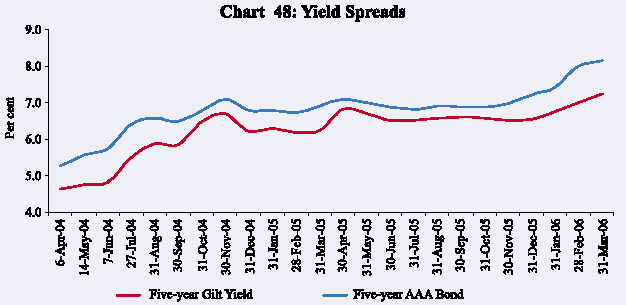
The yields on 5-year AAA-rated corporate bonds increased during 2005-06 in
tandem with higher yields in Government securities. The yield spread over 5-
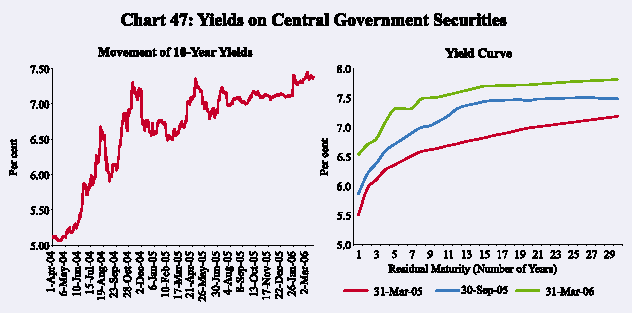
year Government securities - after remaining broadly stable
at 30 basis points during April-October 2005 - increased to 98 basis points
at end-March 2006 from 67 basis points at end-March 2005 (Chart 48).
Equity Market
The capital market exhibited buoyancy during 2005-06, with
the benchmark stock indices reaching record highs driven by strong support from
foreign institutional investors (FIIs) and domestic mutual funds on the back
of robust macroeconomic fundamentals, congenial investment climate and strong
corporate profitability. Resources raised by the Indian corporates through initial
public offerings, private placements and Euro issues increased significantly.
Resource mobilisation by mutual funds also increased sharply.
Primary Market
Resources raised through the public issues increased by 50.5
per cent to Rs.25,649 crore during April-February 2005-06 (Table 42). However,
the average size of issue declined to Rs.217 crore from Rs.370 crore during
the corresponding period of the previous year. Non-Government public limited
companies (private sector) accounted for the bulk (77.4 per cent) of the resources
mobilised. Out of 118 issues, 67 issues were initial public offerings (IPOs),
constituting 47.0 per cent of resource mobilisation as compared with 19 out
of 46 issues being IPOs during the corresponding period of the last year (constituting
25.2 per cent of resource mobilisation). All the IPOs in the current financial
year so far have been by companies in the private sector, barring one which
was from a public sector non-financial company. Resource mobilisation by way
of debt issues during April-February 2005-06 was less than one per cent of total
resource mobilisation from the public issues market.
|
Table 42: Mobilisation of Resources from the Primary Market
|
| |
|
|
|
|
|
|
| |
|
|
|
|
(Amount in Rupees crore)
|
| |
|
|
|
|
|
|
|
Item
|
|
April-February 2004-05
|
April-February 2005-06 P
|
| |
|
|
|
|
|
|
| |
|
|
No. of Issues
|
Amount
|
No. of Issues
|
Amount
|
| |
|
|
|
|
|
|
|
1
|
|
|
2
|
3
|
4
|
5
|
| |
|
|
|
|
|
|
|
A.
|
Prospectus and Rights Issues*
|
|
|
|
|
| |
1.
|
Private Sector (a+b)
|
43
|
12,020
|
111
|
19,863
|
| |
|
a) Financial
|
9
|
5,108
|
9
|
7,575
|
| |
|
b) Non-financial
|
34
|
6,912
|
102
|
12,288
|
| |
2.
|
Public Sector (a+b+c)
|
3
|
5,018
|
7
|
5,786
|
| |
|
a) Public Sector Undertakings
|
-
|
-
|
-
|
-
|
| |
|
b) Government Companies
|
1
|
2,684
|
1
|
373
|
| |
|
c) Banks/Financial Institutions
|
2
|
2,334
|
6
|
5,413
|
| |
3. Total (1+2)
|
46
|
17,038
|
118
|
25,649
|
| |
|
Of which:
|
|
|
|
|
| |
|
(i) Equity
|
43
|
13,729
|
117
|
25,531
|
| |
|
(ii) Debt
|
3
|
3,309
|
1
|
118
|
|
B.
|
Private Placement +
|
|
|
|
|
| |
1. Private Sector
|
533
|
25,543
|
672
|
29,547
|
| |
|
a) Financial
|
198
|
13,894
|
281
|
18,242
|
| |
|
b) Non-financial
|
335
|
11,649
|
391
|
11,305
|
| |
2.
|
Public Sector
|
121
|
23,345
|
108
|
37,741
|
| |
|
a) Financial
|
79
|
14,320
|
84
|
25,477
|
| |
|
b) Non-financial
|
42
|
9,025
|
24
|
12,264
|
| |
3.
|
Total (1+2)
|
654
|
48,887
|
780
|
67,288
|
|
Memo:
|
|
|
|
|
|
|
Euro Issues
|
11
|
2,606
|
43
|
10,099
|
| |
|
|
|
|
|
|
|
P : Provisional. * : Excluding offers for sale. – : Nil/Negligible.
+: April-December 2005.
|
Mobilisation of resources through private placement increased by 37.6 per cent during April-December 2005 as compared with an increase of 15.4 per cent during April-December 2004 (Table 42). This was mainly on account of a turnaround in resources mobilised by public sector entities - an increase of 61.7 per cent during April-December 2005 as against a decline of 21.1 per cent during April-December 2004. Public sector entities accounted for 56.1 per cent of total mobilisation through private placement during April-December 2005 as compared with 47.8 per cent during the same period of last year. Resources raised by financial intermediaries (both from public sector and private sector) accounted for 65.0 per cent of the total mobilisation by private placement during April-December 2005 (57.7 per cent during April-December 2004).
In addition to domestic issuances, the Indian corporates also took a large recourse to Euro issues – American Depository Receipts (ADRs), Global Depository Receipts (GDRs) and Foreign Currency Convertible Bonds (FCCBs). Amounts mobilised through the euro issues more than trebled to Rs.10,099 crore during April-February 2005-06 (Table 42).
Net mobilisation of funds (net of redemptions) by mutual funds also increased substantially by 591.0 per cent to Rs.44,973 crore during April-February 2005-06 over the corresponding period of the previous year (Table 43). Net inflows were witnessed in the case of both income/debt-oriented schemes and growth/ equity-oriented schemes.
Secondary Market
The stock markets witnessed bullish conditions during 2005-06 with the benchmark indices touching all time high levels, driven mainly by support from the FIIs on the back of strong macroeconomic fundamentals of the Indian economy, congenial investment climate, sound business outlook and robust corporate earnings (Table 44). Profits after tax of sample non-financial non-Government companies recorded a growth of more than 40 per cent for 11 successive quarters from October-December 2002 to April-June 2005. Subsequently, growth in profitability decelerated, but still remains high given the strong base of the previous
|
Table 43: Resource Mobilisation by Mutual Funds
|
| |
|
|
|
|
(Rupees crore)
|
| |
|
|
|
|
|
|
| |
2004-05 (April-February)
|
|
2005-06 (April- February)
|
|
| |
|
|
|
|
|
|
|
Mutual Fund
|
Gross
|
Net
|
Net
|
Gross
|
Net
|
Net
|
| |
Mobilisation
|
Mobilisation @
|
Assets *
|
Mobilisation
|
Mobilisation @
|
Assets *
|
| |
|
|
|
|
|
|
|
1
|
2
|
3
|
4
|
5
|
6
|
7
|
| |
|
|
|
|
|
|
|
Private Sector
|
6,51,929
|
9,192
|
1,21,114
|
8,00,735
|
32,756
|
1,67,021
|
|
Public Sector
|
50,244
|
216
|
11,303
|
97,019
|
9,628
|
23,067
|
|
UTI
|
40,006
|
-2,899
|
20,836
|
63,996
|
2,589
|
27,619
|
|
Total
|
7,42,179
|
6,509
|
1,53,253
|
9,61,750
|
44,973
|
2,17,707
|
| |
|
|
|
|
|
|
|
@ :
Net of redemptions. * : As at end of February.
Source : Securities and Exchange Board of India.
|
|
Table 44: Corporate Financial Performance
|
| |
|
|
|
|
|
|
|
|
|
(Growth rates in per cent)
|
| |
|
2003-04
|
2004-05
|
2004-05
|
2005-06
|
|
2004-05
|
|
|
2005-06
|
|
| |
|
|
|
(April-
|
(April-
|
|
|
|
|
|
|
|
| |
|
|
|
|
|
Q1
|
Q2
|
Q3
|
Q4
|
Q1
|
Q2
|
Q3
|
| |
|
|
December)
|
December)
|
|
|
|
|
|
|
|
| |
|
|
|
|
|
|
|
|
|
|
|
|
|
1
|
|
2
|
3
|
4
|
5
|
6
|
7
|
8
|
9
|
10
|
11
|
12
|
| |
|
|
|
|
|
|
|
|
|
|
|
|
|
Sales
|
|
15.4
|
25.2
|
25.9
|
15.7
|
24.8
|
23.7
|
24.1
|
21.0
|
18.5
|
16.4
|
13.2
|
|
Expenditure
|
12.5
|
24.0
|
24.9
|
15.3
|
23.4
|
22.4
|
24.3
|
19.8
|
18.0
|
16.3
|
12.7
|
|
Gross Profit
|
26.6
|
38.9
|
37.8
|
24.1
|
36.0
|
35.8
|
30.5
|
35.3
|
32.0
|
19.1
|
21.2
|
|
Interest Cost
|
-11.5
|
-2.0
|
-2.1
|
-6.4
|
-3.2
|
2.1
|
-13.0
|
-5.4
|
-13.5
|
-8.0
|
4.6
|
|
Profits After Tax
|
57.9
|
53.8
|
48.0
|
35.0
|
51.2
|
45.3
|
45.5
|
51.4
|
54.2
|
27.5
|
27.0
|
| |
|
|
|
|
|
|
|
|
|
|
|
|
|
Memo:
|
|
|
|
|
|
|
|
|
|
|
|
| |
|
|
|
|
|
|
|
|
|
(Amount in Rupees crore)
|
| |
|
|
|
|
|
|
|
|
|
|
|
|
|
No. of Companies
|
2,201
|
1,273
|
895
|
2,010
|
1,255
|
1,353
|
1,464
|
1,301
|
2,355
|
2,361
|
2,366
|
|
Sales
|
|
4,28,072
|
5,68,476
|
3,63,140
|
5,77,271
|
1,35,156
|
1,53,040
|
1,62,193
|
1,79,632
|
1,94,608
|
2,12,693
|
2,19,098
|
|
Expenditure
|
4,06,838
|
4,90,204
|
3,11,105
|
4,95,121
|
1,15,656
|
1,31,227
|
1,40,574
|
1,56,647
|
1,66,972
|
1,83,717
|
1,88,934
|
|
Gross Profit
|
48,852
|
72,406
|
47,591
|
77,286
|
17,234
|
20,448
|
20,017
|
23,736
|
25,577
|
27,620
|
28,135
|
|
Interest Cost
|
14,724
|
12,528
|
7,831
|
12,140
|
3,597
|
3,584
|
3,273
|
3,177
|
4,241
|
4,467
|
4,555
|
|
Profits After Tax
|
26,281
|
47,333
|
31,066
|
51,364
|
10,396
|
13,004
|
13,196
|
16,798
|
16,726
|
18,169
|
18,790
|
| |
|
|
|
|
|
|
|
|
|
|
|
|
|
Note : 1.Growth
rates are percentage change in the level for the period under
reference over the corresponding period of the previous year.
2.Data are based on the audited / unaudited abridged results of the
non-financial non-Government companies except column (2)
which are based on audited balance- sheets for 2003-04.
|
quarters. Liquidity support from mutual funds, firm trends
in the major international equity markets and surge in ADR prices also buoyed
up stock markets. Positive measures announced in the Union Budget, 2006-07 such
as raising FII investment limit in Government securities and corporate debt,
treating open-ended and close-ended equity-oriented schemes on par for dividend
distribution tax, rationalisation of excise duties and relaxation in fringe
benefit tax also helped to boost the market sentiment. Reflecting all these
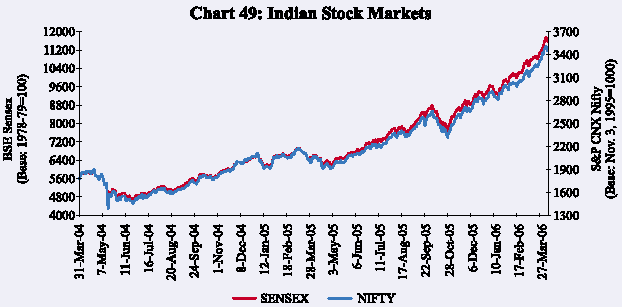
factors, the BSE Sensex reached an all time high level of 11,747 on April 5,
2006 (Chart 49).
|
Table 45: Stock Market Indicators
|
|
Indicators
|
|
BSE
|
|
|
NSE
|
|
| |
|
|
|
|
|
|
| |
2003-04
|
2004-05
|
2005-06
|
2003-04
|
2004-05
|
2005-06
|
| |
|
|
|
|
|
|
|
1
|
2
|
3
|
4
|
5
|
6
|
7
|
| |
|
|
|
|
|
|
|
BSE Sensex / S&P CNX Nifty
|
|
|
|
|
|
|
|
End-period
|
5591
|
6493
|
11280
|
1772
|
2036
|
3403
|
|
Average
|
4492
|
5741
|
8280
|
1428
|
1805
|
2517
|
|
Volatility (CV)
|
22.95
|
11.16
|
16.68
|
23.30
|
11.28
|
15.59
|
|
P/E Ratio (End-period)*
|
18.57
|
15.61
|
20.92
|
20.70
|
14.60
|
20.26
|
|
Turnover (Rupees crore)
|
5,03,053
|
5,18,716
|
8,16,074 P
|
10,99,535
|
11,40,071
|
15,69,555
|
|
Market Capitalisation (Rupees crore)
|
|
|
|
|
|
|
(End-period)
|
12,01,207
|
16,98,429
|
30,22,189
|
11,20,976
|
15,85,585
|
28,13,201
|
|
P: Provisional. CV: Coefficient of Variation.
* : For 30 scrips included in the BSE Sensex and 50 scrips included in
the S&P CNX Nifty.
Source : The Stock Exchange, Mumbai (BSE) and National Stock Exchange
of India Ltd. (NSE).
|
The market witnessed some correction on April 12, 2006 and the BSE Sensex was
11,356 as on April 12, 2006.
The BSE Sensex increased by 73.7 per cent between end-March
2005 and end-March 2006, while the S&P CNX Nifty increased by 67.2 per cent
over the same period. The price-earnings (P/E) ratios increased during the year;
for instance, the P/E ratio for the 30 scrips included in the BSE Sensex increased
from 15.6 at end-March 2005 to 20.9 at end-March 2006. The total turnover in
the cash segment increased sharply during 2005-06. The market capitalisation
also surged on account of increase in stock prices as well as listing of new
securities. The volatility in terms of coefficient of variation increased during
2005-06 as compared with the previous year (Table 45).
The rally in the stock markets during 2005-06 was wide-spread
(Chart 50). On a point-to-point basis, while BSE 500 increased by 65.2 per cent,
BSE Small-cap and BSE Mid-cap increased by 76.9 per cent and 73.6 per cent,
respectively. Amongst the major sectors, BSE capital goods index registered
the highest gain (156.0 per cent), followed by consumer durables (115.4 per
cent), fast moving consumer goods (FMCG) (109.9 per cent), IT sector (49.2 per
cent), public sector undertakings (PSUs) (44.0 per cent) and banking sector
(36.8 per cent). Gains by the capital goods stocks reflected the pick-up in
investment activity and the Government’s emphasis on infrastructure developments
in the Union Budget, 2006-07. The consumer durables stocks were buoyant on the
back of strong growth in sales, good financial results of some of the companies
and mergers and acquisitions in the sector. The FMCG stocks benefited from the
normal progress of monsoon and its positive effect on sales, and abolition of
excise duty on branded foods and reduction in excise duty from 16 per cent to
8 per cent on select fast food items in the Union Budget, 2006-07. Banking sector
scrips gained due to several factors such as pick up in non-food credit of the
banks and permission to banks to issue perpetual bonds and other hybrid instruments.
Favourable proposals in the Union
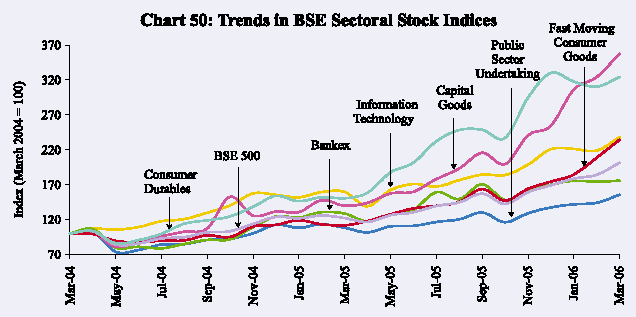
Budget, 2006-07 relating to the banking sector such as conversion
of non-tradable special securities into tradable SLR Government of India dated
securities, and inclusion of fixed deposits of scheduled banks of maturity not
less than 5 years in Section 80C of the Income Tax Act also boosted the banking
sector scrips.
According to the Securities and Exchange Board of India (SEBI)
data, foreign institutional investors (FIIs) made net investment of Rs.48,487
crore (US $ 10.9 billion) in the equity market during 2005-06 on top of net
purchases of Rs.40,991 crore (US $ 9.1 billion) during the previous year (Chart
51). Mutual funds also made net purchases in equities of Rs.14,308 crore during
2005-06 as compared with net purchases of only Rs.448 crore during the previous
year.
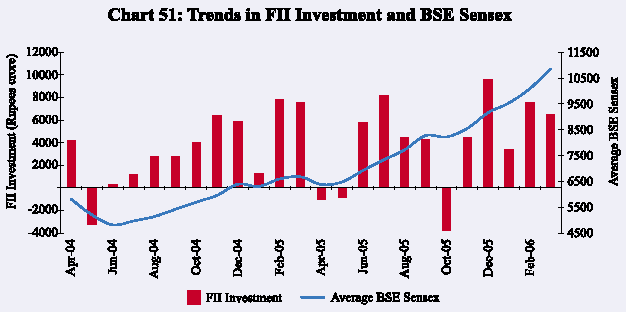
|